All Bets are Off
When Prediction Markets Intersect with Public Service.
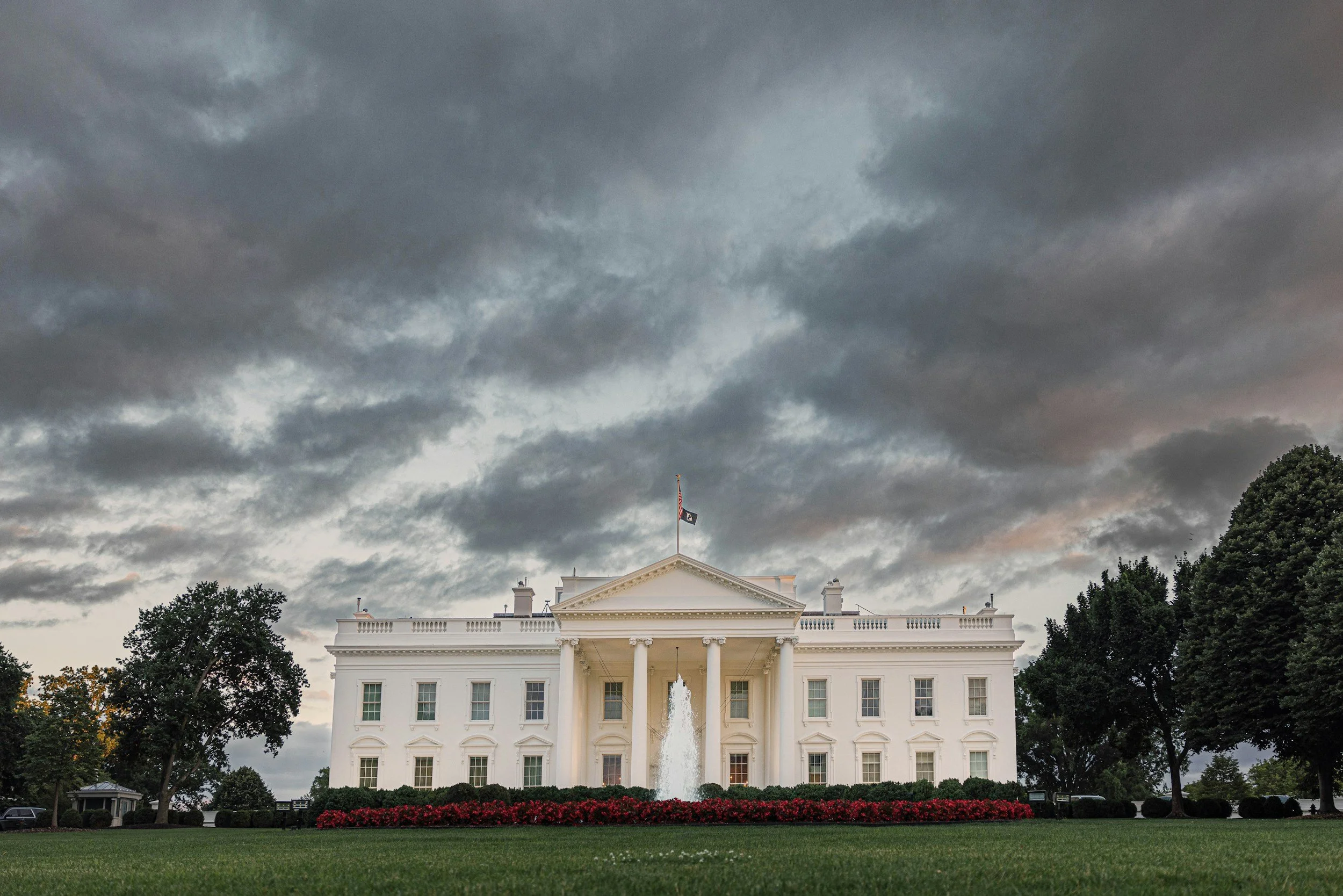
Will the United States confirm that aliens exist before 2027?
Will President Trump dance on May 8th?
With questions like these, prediction markets allow users to bet on a huge range of real-world events, but what happens when those events start to overlap with your duties as a federal employee? Your off-duty bets could have real on-duty consequences if you are relying on your insider knowledge to place those bets.
Let’s explore the growing popularity of prediction markets and exactly how prediction market activity can impact your federal employment.

What are Prediction Markets?
Prediction markets are online platforms that allow people to bet on the likelihood of future events. These events could range from sporting events to elections to (most recently) military action. If you guess right, then you win money. If you guess wrong, you lose your bet. Prediction markets call these bets “event contracts” and users often have a yes or no option. For example, if the event is “Will the SAVE Act become law?” Users will buy either a “Yes” contract (yes, the SAVE Act will become law) or a “No” contract (no, the SAVE Act will not become law). There are also events with multiple outcomes. For example, “Where will Taylor Swift and Travis Kelce’s wedding occur?” Options available for purchase on Kalshi, one of the most popular prediction market platforms, are New York, Rhode Island, Tennessee, Ohio, and Pennsylvania. To give you an idea of the popularity of these platforms, the total trading volume on the Swift/Kelce wedding is $1,014,857 (as of 9:19 am on May 1st and it continues to climb). New York is the frontrunner.
The prediction market platforms that you’ve most likely seen in the news are Kalshi and Polymarket. Kalshi was founded in 2018 and publicly launched in 2021. Their website claims they are the “largest prediction market in the world.” Polymarket was founded in 2020, and their website also claims they are the “world’s largest prediction market.” Notably, US users only regained access to Polymarket in late 2025. (Polymarket blocked access to US customers from 2022 until late 2025 after a settlement with the Commodity Futures Trading Commission (CFTC) for regulatory violations.) Regardless, both platforms had massive financial success last year. The New York Times reported that nearly $12 billion was traded on Kalshi and Polymarket in December 2025, which is up 400% from 2024, and both companies have raised billions from investors. They have also been the subject of robust debate over prediction market regulation and insider trading concerns, especially with government officials.

The Case that Changed the Conversation.
On April 23, 2026, federal authorities announced that a Master Sergeant with the U.S. Army Special Forces was charged with using classified information to place bets on Polymarket. Specifically, the soldier bet on outcomes related to the mission that captured Nicolas Maduro in Venezuela, including the likelihood of US forces being in Venezuela by certain dates and the likelihood of Maduro being out by certain dates. The soldier did this while he was participating in the planning and execution of the operation, and he made more than $400,000 on these trades. An April indictment charged the soldier with “unlawful use of confidential government information for personal gain, theft of nonpublic government information, commodities fraud, wire fraud, and making an unlawful monetary transaction.” (DOJ Press Release)
Even before this indictment, concerns swirled about insider trading by government personnel and the concerns were not limited to military personnel. As of April 21, 2026 (two days before the indictment), the Congressional Research Service cited fifteen bills introduced in Congress that would restrict trading of event contracts on certain subjects and regulate trading by certain government personnel. The earliest of these bills was introduced in January 2026, and three of the fifteen bills are specifically aimed at limiting the ability of government personnel to participate in prediction markets. (CRS Summary) The Wall Street Journal also reported that White House staff was warned to not use insider information to place bets on prediction markets in late March after a series of suspiciously timed trades involving the war in Iran.
It is an understandable concern and the temptation is real. Government service (both military and civilian) is not a particularly lucrative profession, and prediction markets can be extremely profitable. The soldier mentioned above made over $400,000 on his trades. I am certain the Army is not paying him that much. Also, prior to prediction markets, I suspect most government personnel were not in a position to engage in what we’ve traditionally assumed to be insider trading. Insider trading typically brings to mind wealthy, high-level executives or even celebrities (Martha) – not government employees. With the advent of prediction markets, government employees are now finding themselves in positions of power, because, after all, knowledge is power. However, improper use of that power can quickly backfire on the employee, and it does not necessarily have to threaten national security. Keep in mind that the concern is any non-public, government information, not just classified information. This could include upcoming policy shifts, information about pending or awarded contracts, information about pending investigations, and more. You aren’t safe from insider trading concerns just because you aren’t working on secret missions

Off-Duty Behavior, On-Duty Consequences.
As a federal employee, what could you lose if you make trades using non-public government information in your free time? Everything.
First, an agency can discipline employees (including removal from federal service) for any off-duty misconduct if there is a “nexus” to their government employment. This is not a new concept, and it is certainly not limited to prediction market activity. To discipline, an agency must show a connection between the employee’s conduct and the work of the agency, and there are three ways that they can do this:
(1) egregious circumstances (example: violent crime or sexual misconduct);
(2) preponderant evidence that the misconduct adversely affects the employee or co-worker’s job performance or the agency’s trust and confidence in the employee’s job performance; or
(3) preponderant evidence that the misconduct interfered with or adversely affected the agency’s mission.
Scheffler v. Department of the Army, 117 M.S.P.R. 499, ¶ 10 (2012), aff’d, 522 F. App’x 913 (Fed. Cir. 2013).
Examples of off duty conduct that might result in discipline include violent crime, sexual misconduct, threats against co-workers outside the office, fraud, failure to pay debt, and using your public position for private gain. Trading on non-public information clearly has the potential to impact the agency’s trust and confidence in an employee and adversely affect the agency’s mission. To take the Venezuela example above, a high volume of trades on Venezuela on January 2nd could have tipped off users outside the government to impending military action. So, not only did the soldier personally profit from his position, but he also put the mission at risk. (Military personnel are subject to a different disciplinary construct than federal civilian employees, but I’m just using the soldier’s behavior as an example. This could have easily been a federal civilian employee with knowledge of the Venezuela operation).
Next, the government ethics regulations for executive branch employees specifically prohibit this type of behavior, and employees can be disciplined for violating those regulations. Again, keep in mind that there are many types of government personnel – military personnel, legislative branch employees, executive branch employees, etc., and the rules can vary. However, for executive branch employees (which are the vast majority of civilian (non-military) government employees) the regulations are clear. 5 CFR 2635.703(a) states that employees “may not engage in financial transactions using nonpublic information, nor allow the improper use of nonpublic information to further their own private interests or those of another, whether through advice or recommendation, or by knowing unauthorized disclosure.” Prediction market trading on non-public information appears to be a clear violation.
For legislative branch employees, other rules apply that limit the private use of government information (Ethics in Government Act (EIGA), the Stop Insider Trading on Congressional Knowledge (STOCK) Act of 2012, and both the House and Senate have their own ethics rules). On April 30, 2026, the Senate went further and voted to ban senators, staff, and other chamber officials from trading on prediction markets related to political outcomes and policy decisions, and the House has been encouraged to do the same. Plus, there are still multiple bills proposed in Congress that would also outline these prohibitions and personnel covered, if passed.
For some government personnel, the consequences could extend even further. Personnel who hold a security clearance are also required to sign a non-disclosure agreement which prohibits them from divulging classified information. This is yet another restriction on the ways that employees can use government information. If you hold a clearance, you have a duty to protect classified information and to not use that information for personal financial gain.
Finally, I hope it goes without saying, but keep in mind that prediction market trading quickly becomes on-duty misconduct if it occurs during the workday and on your government computer. In this case, you’ve made the case against yourself even easier because the government has the benefit of your web history. Remember that you do not have an expectation of privacy on your government computer (make sure you read all those banners you click through every morning when you log on), and that information can be used to support a disciplinary action.

What Now?
Just don’t do it. While prediction markets feel new and novel, the restriction on using government information for your own personal gain is not. Also, this discussion has been primarily focused on how prediction market trading on government information can impact your current federal employment. Keep in mind that there is much more at risk than just next week’s paycheck – you risk your career as a public servant and your freedom. Improper use of government information carries the potential for criminal charges that can come with severe fines and imprisonment. It can also impact your ability to hold a security clearance, which affects not only your current job, but your potential to find another government position requiring a clearance in the future.
If you are a federal employee and you are considering jumping on the Kalshi or Polymarket bandwagon, think twice as you browse the politics section, or even better, just stick to betting on Taylor Swift’s wedding.